Africa’s Call at a Global Inflection Point: Lessons from Global Fund Reprioritisation and What a Sustainable GC8 and Global Health Partnership Must Deliver
As global health financing enters a period of sustained uncertainty, African countries find themselves at the sharpest edge of recalibration. Slowing growth in official development assistance, rising debt burdens, climate shocks, and post-pandemic fiscal stress are converging just as expectations for domestic ownership, efficiency, and integration are intensifying. 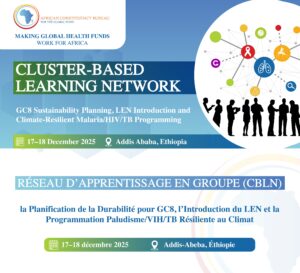
Against this backdrop, the Global Fund to Fight AIDS, Tuberculosis and Malaria is preparing its Grant Cycle Eight (GC8). This new cycle builds on the reprioritisation exercise undertaken earlier under the current GC7 (2025), necessitated by shifts in the global health landscape following changes in the U.S. administration. The lessons emerging from African countries’ experiences during GC7 reprioritisation extend far beyond the Global Fund, offering insight into how global health initiatives (GHIs) must adapt if hard-won gains against HIV, TB, malaria, vaccine-preventable diseases, and other conditions are to be sustained.
In December 2025, countries from Eastern and Southern Africa (ESA) and West and Central Africa (WCA) convened in Addis Ababa under the African Constituency Bureau’s (ACB) Cluster-Based Learning Network (CBLN). What emerged was a clear, collective call for a more predictable, country-led, and system-anchored global health partnership within the Global Fund and across the wider GHI architecture. 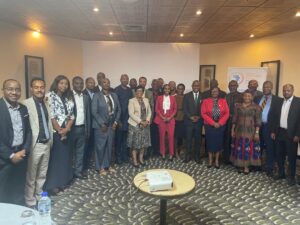
GC7 Reprioritisation: A Stress Test for Health Systems and Partnerships
For African countries, GC7 reprioritisation following a reduced funding envelope and occurring mid-cycle for most became a stress test not only of national health systems, but also of global health partnership models themselves.
Most countries succeeded in safeguarding life-saving commodities, often with governments stepping in to cover gaps for antiretrovirals, TB medicines, and malaria supplies. However, this protection came at a cost. Investments most critical for resilience, human resources for health, community systems, routine M&E, laboratories, supply chains, and technical assistance, were frequently reduced or deferred.
Across regions, countries described similar challenges:
- Late and insufficient signalling, limiting the ability to plan or phase adjustments
- Procedural intensity, with CCMs and ministries spending months to revise plans rather than delivering services
- Erosion of workforce morale, with widespread reduction of number or amount of payment to staff following cut in investments in “soft” systems.
- Perceptions of top-down decision-making, with limited space for national prioritisation
From a global health perspective, GC7 revealed a fundamental contradiction: systems are expected to integrate, absorb shocks, and sustain gains, yet the very investments that enable those outcomes are treated as discretionary when resources tighten.
Sustainability Reframed: From Compliance to Political Economy
African countries were unequivocal: sustainability is not optional—but neither is it simple.
Rather than framing sustainability as a financing endpoint, countries articulated it as a political and fiscal pathway, shaped by debt servicing, climate emergencies, inflation, and competing national priorities. The long-standing 15% Abuja Declaration target was reaffirmed as a shared commitment, while being widely recognised as increasingly challenging to attain under current macro-fiscal realities.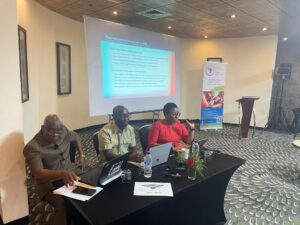
At the same time, countries shared tangible progress that challenges the narrative of dependency:
- Expansion of national and community-based health insurance schemes
- Introduction of earmarked levies on tobacco, sugar, airtime, and extractive industries
- Increased government financing for commodities and community health workers
- Strategic engagement with private sector and diaspora resources
What countries are asking of the Global Fund in GC8 and of GHIs more broadly is support for domestic resource mobilisation as a system, not as a conditionality. This includes financing health financing dialogues, providing post-dialogue technical assistance, and embedding accountability mechanisms that meaningfully involve civil society and communities.
The overarching message is clear: sustainability cannot be accelerated through pressure alone; it must be built through predictability, political alignment, and long-term institutional investment.
Integration: A Shared Aspiration, Often an Unfunded Mandate
Integration of some disease programs like HIV, TB and malaria into primary health care platforms emerged as a unifying priority across countries. Yet participants were equally clear that integration is not cost-neutral.
Training polyvalent health workers, adapting service delivery models, aligning data systems, and maintaining quality across multiple disease areas require upfront and sustained investment. When prevention, community systems, and workforce funding are reduced under the banner of efficiency, integration risks reducing the quality of care offered to communities.
This lesson extends beyond the Global Fund. Across global health initiatives, Africa’s experience shows that integration will not work if programme funding is reduced without strengthening the health system that is expected to take on more work.
Procurement and Manufacturing: Efficiency Must Serve Resilience
Pooled procurement, particularly through Global Fund mechanisms such as Wambo.org, was acknowledged as valuable especially for countries with limited procurement capacity. However, experiences were mixed. 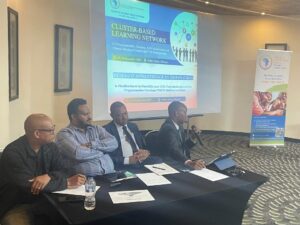
Countries raised concerns around long lead times, limited supplier diversity, pricing rigidity, and reduced national ownership. Several warned that excessive reliance on global pooled systems may inadvertently weaken domestic institutions and slow Africa’s ambitions for local and regional manufacturing.
The call from Africa is not to abandon pooled procurement, but to rebalance it by strengthening national systems, expanding African supplier participation, respecting regional regulatory bodies, and investing in regional manufacturing hubs. This reflects a broader shift in global health thinking: efficiency gains must be weighed against resilience, sovereignty, and long-term sustainability.
Innovation Without Fragmentation: Lessons from LEN Readiness
The introduction of long-acting HIV prevention technologies, including LEN, was met with cautious optimism. Countries welcomed innovation but emphasised that readiness varies significantly across regulatory, supply chain, service delivery, and pharmacovigilance dimensions.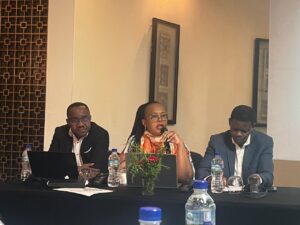
A strong consensus emerged that innovation must not create new vertical silos. LEN and similar technologies should be integrated into comprehensive prevention packages, aligned with existing platforms, and sequenced realistically based on country capacity.
This message resonates beyond GC8: innovation that bypasses systems ultimately weakens them.
Climate Change: The New Baseline for Health Planning
Perhaps the most universal conclusion was that climate change is no longer peripheral to health programming, it is a defining risk.
Countries described floods, droughts, cyclones, and heatwaves as already disrupting HIV, TB, and malaria services. Yet climate financing for health remains limited and fragmented.
African countries called for GC8 to embed climate risk across grant design, surveillance, supply chains, and service delivery, with flexible mechanisms to respond to shocks. Importantly, they stressed that climate integration must build on existing national systems, not create parallel reporting structures.
For the broader GHI community, the implication is stark: health programmes that ignore climate risk will underperform, regardless of technical design. 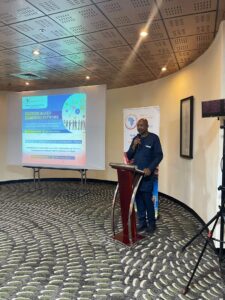
What Africa Is Saying—to the Global Fund and Beyond
While these reflections are anchored in Global Fund GC8, the messages carry wider relevance for all global health initiatives:
- Predictability is as critical as volume of financing
- Country ownership must be substantive, not procedural
- Sustainability is a negotiated pathway, not a deadline
- Integration requires investment, not just efficiency rhetoric
- Procurement models must strengthen, not substitute, national systems
- Innovation must reinforce system coherence
- Climate resilience is foundational to health resilience
As GC8 takes shape, African countries are not resisting change, they are shaping it. Their collective voice points toward a global health model that is more honest about constraints, more respectful of country leadership, and more focused on building systems that can endure uncertainty.