Transition in Global Health Financing Must Protect Africa’s Hard-Won Gains
The global health financing landscape is changing. Donor priorities are evolving, fiscal pressures are tightening in many traditional funding countries, and there is increasing emphasis on sustainability and domestic resource mobilisation. Within this shifting context, discussions about “transition”, the gradual reduction of external funding as countries assume greater responsibility for their health programmes, are becoming central to the future of the Global Fund to Fight AIDS, Tuberculosis and Malaria.
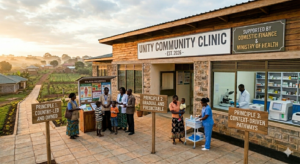
African constituencies recognize that this evolution is inevitable and, in many respects, desirable. Strengthening national leadership and domestic investment in health systems is an essential component of long-term sustainability. Yet transition must be approached with caution and realism. If poorly managed, it could jeopardize the remarkable progress achieved over the past two decades in the fight against HIV, tuberculosis (TB) and malaria. For Africa, where the burden of these diseases remains disproportionately high, the stakes could not be greater.
Countries in Eastern and Southern Africa (ESA) and West and Central Africa (WCA) together account for more than 70 percent of people living with HIV globally, 24 percent of TB cases, and 95 percent of malaria cases. These figures illustrate both the scale of the challenge and the importance of sustained international partnership. Transition, therefore, should not be interpreted as a simple reduction of support. Rather, it should be understood as a strategic partnership that builds sustainable national capacity while protecting the health gains achieved through decades of investment.
Country Ownership and Stewardship
A central principle of transition must be country ownership. While all countries are moving toward greater self-reliance, the pace and trajectory of that journey will differ depending on fiscal space, health system capacity and disease burden. Transition cannot follow a uniform formula.
Governments must therefore determine priorities based on national realities. Strong stewardship, particularly through Ministries of Health and national coordination platforms, will be essential to ensure accountability and sustainability. In many countries, transition will involve integrating disease-specific programmes into broader government health services. Done well, this integration can strengthen efficiency and resilience across the health system.
Greater Use of Country Systems
Sustainable transition also requires greater reliance on national systems for programme implementation, including public financial management, procurement and supply chains, laboratories, health information systems and national audit institutions.
However, country systems operate differently across contexts. South Africa finances about 74 percent of its HIV response domestically, yet its Supreme Audit Institution does not specifically audit Global Fund grants. In Malawi, donor financing remains central to the HIV and broader health sector response, but the national audit office directly audits Global Fund-supported programmes.
These examples illustrate why transition should reflect existing institutional arrangements. Responsibilities should be transferred gradually to national systems as capacity strengthens, rather than through abrupt changes that could disrupt programmes.
Strengthening Systems for Health
Transition must also reinforce resilient systems for health. Investments in workforce capacity, supply chains, laboratories, surveillance and health information systems remain fundamental to sustaining progress against HIV, TB and malaria.
Supply chains offer a useful illustration. The Global Fund may continue to leverage its purchasing power to negotiate competitive prices for essential commodities, while procurement and distribution increasingly shift toward national systems and local entities. Such hybrid approaches can combine global efficiency with national ownership.
Without strong systems, however, domestic financing alone will not sustain results. Transition strategies must therefore prioritize absorbing core system costs, including health workers, laboratories and supply chains. that underpin effective disease responses.
The Role of Community Systems
Community systems remain critical to service delivery, accountability and reaching vulnerable populations. Across Africa, community organizations play a central role in prevention, treatment adherence and outreach to marginalized groups. In many countries, those community systems preceded the establishment of the Global Fund.
Yet many of these interventions have historically been donor-funded. As transition progresses, mechanisms such as social contracting will be needed to enable governments to progressively finance community-led responses. Sustaining community engagement will be essential for maintaining coverage and ensuring accountability.
Principles for a Responsible Transition
Several principles should guide transition. First, it must remain country-led and grounded in national ownership. Second, timelines must be gradual and predictable, as abrupt adjustments can undermine implementation. Third, pathways should reflect context , including disease burden, fiscal space and system readiness , rather than income classifications alone.
The implications of transition are already unfolding unevenly across countries, reflecting differences in income status, fiscal space and disease burden. Several lower-middle-income countries, including Kenya, Ghana and Zambia, are facing increasing co-financing expectations and gradual shifts toward greater domestic responsibility for their health programmes. While these countries have made important economic gains, they continue to carry significant HIV, tuberculosis and malaria burdens, raising important questions about the pace and sustainability of transition. Also, their maturity levels in different areas of grant implementation differ. For example, the Kenya Medical Store Authority (KEMSA) is in charge of the procurement and distribution of the commodities, even with the Global Fund resources; meanwhile, Ghana uses the Global Fund pooled procurement mechanism to purchase health commodities.
Upper-middle-income countries such as South Africa and Botswana finance a substantial share of their HIV responses domestically, illustrating progress toward national ownership. In South Africa for example, advocacy and other interventions for key populations are funded by the Global Fund or the US bilateral funding highlighting the continued importance of strategic external support, particularly for prevention and key populations. In contrast, low-income and high-burden countries including Malawi, Mozambique and the Democratic Republic of the Congo remain heavily reliant on external financing, with limited fiscal space to rapidly absorb programme costs.
These differing trajectories underscore a fundamental point: transition cannot be determined by income classification alone. It must be grounded in a nuanced assessment of disease burden, health system capacity and macro-fiscal realities.
Domestic financing expectations must also remain realistic. Many African countries face debt pressures, fiscal constraints, war or postwar reconstruction, and economic shocks that limit their ability to rapidly expand health spending. Finally, catalytic investments should strengthen national systems and support sustainability without reducing country allocations.
A Partnership for the Future
Transition should be understood as a pathway toward sustainable national leadership, not a withdrawal of partnership. By strengthening country ownership, supporting national and community systems and maintaining strategic investments, the Global Fund and its partners can help ensure that the progress achieved against HIV, tuberculosis and malaria is not only preserved, but sustained for the long term.