Designing GC8 as if It Were the Last Grant: Why Global Health Financing Has Entered a New Era
For more than two decades, the rules of global health financing were remarkably predictable.
Countries battling HIV, tuberculosis (TB), and malaria could expect successive rounds of international support, each building on the last. As donor resources expanded, programmes grew, often through disease-specific systems with dedicated supply chains, laboratories, reporting structures, and workforces. The assumption was that another funding cycle would follow, often with greater resources and broader ambitions.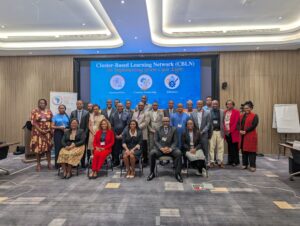
That assumption no longer holds.
As representatives from fourteen African countries gathered in Nairobi this month for the African Constituency Bureau (ACB) and WHO/AFRO Cluster-Based Learning Network (CBLN) to prepare applications for the Global Fund’s Grant Cycle 8 (GC8), the conversation was markedly different from previous funding cycles. Delegations were no longer asking how best to invest what they hoped would be their largest grants. Instead, they were grappling with a more fundamental question:
How do we sustain health gains in a future where external financing can no longer be taken for granted?
One message resonated throughout the meeting: Design GC8 as though it were the last grant cycle.
This was not a prediction that donor financing would disappear overnight. Rather, it was a strategic mindset, one that reflects a profound shift in the landscape of global health. GC8 is not simply another funding round; it represents a transition from an era of donor-led expansion to one defined by sustainability, efficiency, and nationally owned health systems.
A Changing Global Health Landscape
The Global Fund has transformed the fight against HIV, TB, and malaria, investing billions of dollars annually across more than one hundred countries. These investments have saved millions of lives, strengthened health systems, and enabled remarkable progress toward disease control.
Yet the environment that made this model possible is changing.
Fiscal pressures in donor countries, competing geopolitical priorities, inflation, and increasing demands on development budgets are reshaping international assistance. At the same time, many countries continue to face growing populations, rising healthcare costs, and expanding expectations for universal health coverage.
Countries preparing GC8 funding requests are working with allocations that are, on average, approximately 18 percent lower than those of the previous grant cycle, with some experiencing reductions approaching 30 percent. Meanwhile, expectations for domestic resource mobilization and long-term sustainability continue to grow.
This changing context demands a fundamentally different approach to programme design. The question is no longer simply how to maximize grant funding, but how to maximize health impact with increasingly constrained resources.
Prioritization Is No Longer Optional
One of the clearest messages emerging from Nairobi was that countries can no longer afford to fund everything.
Participants repeatedly emphasized the need to distinguish between interventions that are desirable and those that are indispensable. Every investment must now demonstrate measurable impact, supported by epidemiological evidence, cost-effectiveness, and clear public health value.
This represents a significant departure from previous funding cycles, where proposals often sought to address a broad range of priorities simultaneously. Today, difficult choices are unavoidable.
Countries are increasingly expected to focus on interventions that save the greatest number of lives, protect previous investments, and deliver sustainable results. Ambition alone is no longer sufficient; every activity must justify its place within a constrained financing envelope.
In this environment, prioritization becomes not a limitation, but a strategic discipline.
Integration Has Become a Financing Strategy
Perhaps the most important conceptual shift discussed during the Nairobi meeting concerns sustainability itself.
For years, sustainability plans often appeared as final chapters in funding proposals, describing how governments might eventually replace donor financing after grants ended. Increasingly, that thinking is being reversed.
The first question is no longer where future funding will come from. It is whether programmes can be redesigned to deliver equal or better outcomes with fewer resources.
Integration therefore becomes more than a health systems objective, it becomes a financing strategy. Rather than maintaining separate systems for HIV, TB, and malaria, countries are increasingly encouraged to integrate services within primary healthcare, while sharing laboratories, procurement systems, supply chains, health information platforms, and community health workers wherever appropriate.
These changes reduce duplication, improve efficiency, and strengthen resilience across the health system.
Importantly, integration should not be understood as reducing disease-specific attention. Instead, it aims to preserve disease outcomes by embedding them within stronger national systems capable of delivering multiple services more efficiently. The countries best positioned for the future will be those that view sustainability not as replacing donor funding, but as redesigning programmes to require less external support while maintaining performance.
What Makes a Strong GC8 Proposal?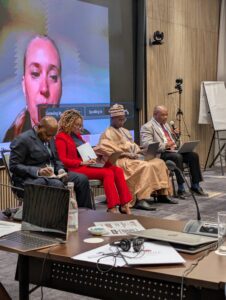
Countries that have already submitted applications during the first GC8 window provided valuable insights into what distinguishes stronger funding requests. Mock reviews modeled on the Global Fund’s Technical Review Panel (TRP) identified several recurring weaknesses:
- Strategic priorities were often insufficiently defined.
- Epidemiological data lacked the granularity needed to identify populations being left behind.
- Integration was frequently mentioned but rarely translated into operational plans.
- Sustainability sections often appeared disconnected from programme design, while budgets, targets, implementation plans, and performance frameworks were not always fully aligned.
By contrast, the strongest applications shared one defining characteristic: They told a coherent story. Every proposed investment could be traced logically from disease burden to intervention, budget, implementation strategy, expected outcomes, and long-term sustainability.
This coherence is becoming increasingly important as funding becomes more competitive and expectations for demonstrable impact continue to rise.
Country Ownership Must Move from Principle to Practice
The most compelling lessons came from countries already managing the transition away from external financing.
- Namibia: Currently preparing to receive its final Global Fund allocation, Namibia has spent years planning for this moment. Rather than focusing solely on replacing donor resources, the country has developed a costed sustainability roadmap, invested in digital health systems, advanced legislation supporting universal health coverage, and broadened ownership beyond the Ministry of Health to include the Ministry of Finance, the Attorney General’s Office, and the Presidency. Its experience highlights an important lesson: Sustainability is ultimately less about financing than governance.
- Eswatini: Navigating simultaneous transitions from both the Global Fund and PEPFAR after achieving internationally recognized HIV epidemic control targets, Eswatini emphasized that future success depends not on expanding programmes but on protecting hard-won gains. Perhaps most importantly, officials argued that governments not donors must define national priorities first, with external partners aligning their investments behind those priorities.
This represents one of the clearest expressions of genuine country ownership. Ownership is not demonstrated through participation in programme implementation alone. It is demonstrated when governments lead strategic decision-making, coordinate partners around national priorities, and build institutions capable of sustaining progress long after external financing declines.
Domestic Financing Is Becoming the Ultimate Test
Another defining feature of GC8 is the growing importance of domestic financing. Co-financing requirements are no longer viewed simply as policy commitments. Increasingly, they determine access to portions of Global Fund grants.
Governments are therefore expected to demonstrate not only political commitment but also credible budget allocations, implementation timelines, and accountability mechanisms. Experiences shared by countries including Benin and Kenya illustrated that sustained engagement with Ministries of Finance, combined with high-level political leadership, can successfully translate commitments into concrete domestic investments.
This evolution reflects a broader reality: Sustainability cannot be outsourced.
While international financing will remain essential for many countries over the coming years, preserving progress will increasingly depend on national political commitment, stronger public financial management, and sustained domestic investment.
Beyond GC8: A New Model for Global Health
Although the Nairobi discussions focused on the Global Fund, the lessons extend far beyond a single grant cycle.
Many of the same pressures are emerging across the global health landscape. Development assistance is becoming more constrained, while expectations for efficiency, integration, and domestic ownership continue to grow. Similar conversations are taking place across other global health initiatives and bilateral programmes.
The central challenge is therefore no longer how to finance individual disease programmes indefinitely. It is how to preserve decades of health gains by building resilient national systems capable of sustaining progress under increasingly constrained external financing.
Countries across Africa are already demonstrating what this transition can look like: integrating disease programmes into primary healthcare, strengthening domestic procurement systems, investing in digital health, expanding health insurance mechanisms, and institutionalizing community health workers within national systems. These are not simply adjustments to donor requirements; they are investments in long-term resilience.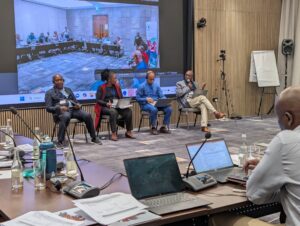
Building What Comes Next
The transition ahead will not be easy. Many countries continue to face severe fiscal constraints, competing development priorities, and substantial health burdens. External financing will remain indispensable for years to come.
Yet the conversation has fundamentally changed.
The most forward-looking countries are no longer asking how to preserve existing programmes exactly as they are. They are asking how to redesign them to become simpler, more integrated, more efficient, and ultimately more sustainable.
Grant Cycle 8 may therefore be remembered for something far more significant than the size of its funding allocations. It may mark the moment when global health financing stopped preparing countries for the next grant, and started preparing them for the day when there may not be one.