Integration Without Exclusion: What Does GC8 Mean for Community, Rights and Gender
Countries where the Global Fund invests are preparing their funding requests for the Global Fund’s Grant Cycle 8 (GC8) amid a significant shift in the global health funding landscape.
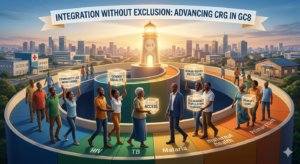 Against a backdrop of resource constraints, evolving donor priorities, and growing calls for sustainability, the Global Fund is increasingly emphasising integrated, people-centred health systems rather than disease-specific approaches it has championed in the past. While this transition presents opportunities for efficiency and long-term resilience, it also raises an important question for communities, civil society, and policymakers alike: can Community, Rights and Gender (CRG) priorities remain visible and adequately resourced within increasingly integrated health systems?
This question was at the heart of a recent constituency dialogue organized by the African Constituency Bureau (ACB) with the Global Fund’s Community, Rights and Gender (CRG) Department. The discussion brought together CCM members, civil society organizations, community representatives, and implementing partners to examine what GC8’s strategic shifts mean for equitable access to HIV, tuberculosis (TB), and malaria services across Africa.
Integration Is Not the Same as Inclusion
The move toward integrated service delivery reflects broader global health trends. Countries are increasingly encouraged to deliver services for HIV, TB, malaria, maternal health, and other health priorities through primary healthcare platforms rather than maintaining separate, vertical programs.
On paper, integration appears logical. It can reduce duplication, improve efficiency, and strengthen national health systems. However, participants highlighted a critical distinction: integration does not automatically translate into inclusion.
For many key and vulnerable populations, barriers to healthcare are not primarily geographical or financial. They are social, legal, and structural. Stigma, discrimination, criminalization, gender inequality, and exclusion continue to prevent people from accessing services even when those services are technically available.
This reality underscores an important shift in thinking reflected in GC8. The challenge is no longer simply ensuring that services exist. The challenge is ensuring that services are genuinely accessible to those who need them most.
A health facility may offer HIV testing, TB treatment, or malaria services, but if individuals fear discrimination, breaches of confidentiality, or judgment from healthcare providers, those services remain out of reach. In many contexts, integrated healthcare settings can inadvertently amplify these concerns if health workers are not adequately trained to provide rights-based and gender-responsive care.
Why Community Systems Matter More Than Ever
One of the most significant messages emerging from the GC8 discussions is that community systems should no longer be viewed as peripheral actors in health delivery. Rather, they are essential components of resilient and equitable health systems.
Community-led organizations often serve populations that formal health structures struggle to reach. They provide trusted entry points for services, support adherence and treatment retention, document human rights violations, facilitate community-led monitoring, and create accountability mechanisms that strengthen overall program performance. Traditionally, those community organisations were donor-funded.
Thus, community systems frequently remain among the most vulnerable components of health financing. As countries move toward sustainability and reduced dependence on external funding, questions are increasingly asked about how these systems will be financed in the future.
GC8 places greater emphasis on defining pathways for sustaining community systems within national health responses. This reflects a growing recognition that investments in community engagement, rights protection, and gender-responsive programming are not supplementary activities; they are prerequisites for achieving health outcomes.
Without strong community systems, progress toward ending HIV, TB, and malaria will remain uneven and incomplete.
Rights and Gender should not Become Casualties of Integration
Another concern emerging from the transition toward integrated health systems is the potential dilution of human rights and gender priorities.
Historically, dedicated CRG investments have played a critical role in addressing barriers to care, including stigma reduction, legal literacy, gender-based violence, and community empowerment. Under GC8, these priorities remain firmly embedded in Global Fund policy and funding frameworks, including catalytic matching-fund opportunities and requirements related to minimum human rights standards.
However, preserving these gains will require deliberate action at country level.
Countries developing GC8 funding requests must ensure that rights and gender considerations are not treated as standalone compliance requirements. Instead, they should be integrated into the design, implementation, monitoring, and evaluation of health programs. This requires ensuring meaningful participation of affected communities, investing in barrier reduction interventions, and embedding accountability mechanisms throughout the grant cycle.
Importantly, rights-based approaches are not only ethical imperatives; they are also effective public health strategies. Evidence consistently demonstrates that programs designed around the needs and realities of affected populations achieve stronger health outcomes.
The Sustainability Challenge
Perhaps the most difficult question facing countries is how to sustain CRG gains in an era of tightening donor resources and increased hostility toward some key populations.
This crossroad reveals both risks and opportunities.
The risk is the trade-off in financing community-led responses, human rights interventions, and gender-focused programming versus commodities, clinical services, or infrastructure. It is important to avoid a strategic mistake: health outcomes are shaped not only by the availability of medicines and diagnostics, but also by whether people are willing and able to access them.
The opportunity lies in reframing CRG investments as core health system functions rather than optional add-ons. By demonstrating their contribution to improved service uptake, retention, treatment outcomes, and accountability, community systems can strengthen the case for sustained domestic and external investment.
A Defining Moment for GC8
The discussions surrounding GC8 suggest that the future of Community, Rights and Gender programming will not be determined by whether integration occurs. Integration is already happening. The real question is whether health systems can evolve in ways that remain responsive to the people most at risk of being left behind.
For countries preparing their GC8 funding requests, this requires moving beyond a narrow focus on service delivery and embracing a broader vision of equitable access. It means ensuring that community voices are heard, that rights are protected, and that gender-related barriers are addressed throughout the health system.
As global health financing enters a new era, the success of GC8 may ultimately be judged not only by how many services are delivered, but by who is able to access them.
The future of Community, Rights and Gender programming therefore lies not in resisting integration, but in ensuring that integration advances equity, dignity, and inclusion for all. Only then can the promise of people-centered health systems become a reality.