From Country Experience to Global Health Policy: Rethinking Country Ownership and Global Health Financing
As global health financing comes under increasing pressure, discussions in Accra revealed a deeper set of questions about country ownership, national systems and the way international health financing works in practice.
Accra, Ghana | September 2026
What does country ownership really mean when governments are expected to lead their health responses, while important financing decisions, implementation arrangements and accountability processes can remain shaped by external systems?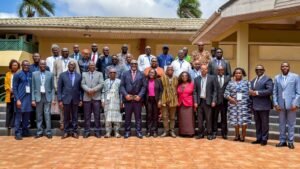
This was one of the underlying questions emerging from a regional dialogue convened by the African Constituency Bureau (ACB) and the WHO Regional Office for Africa in Accra, Ghana, from 16 to 18 September 2026.
The meeting brought together African government representatives, Country Coordinating Mechanisms (CCMs) from more than 21 countries, civil society, development partners and Global Fund governance members representing Eastern and Southern Africa and West and Central Africa. Against a backdrop of declining external resources and growing expectations for domestic financing, participants examined what sustainability and country ownership mean in practice not only in funding requests, but in the systems and institutions that ultimately deliver health services.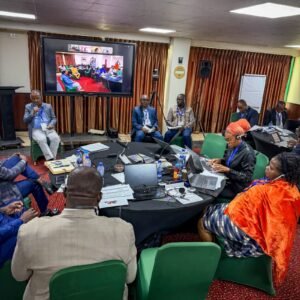
The discussions went beyond the familiar calls for sustainability, integration and domestic resource mobilisation. Country experiences raised more fundamental questions about how global health financing arrangements work on the ground: Who controls resources? How are risks managed? When do safeguards become barriers to building national capacity? And what happens when resources are committed on paper but do not reach programmes and services when they are needed?
The answers suggest that the sustainability challenge is not only about where the money will come from. It is also about how resources are managed, how national institutions are strengthened and whether countries have the space and capacity to lead.
When safeguards risk becoming permanent arrangements
Few issues illustrated this tension more clearly than the discussion around fiscal agents and the Global Fund’s Additional Safeguard Policy (ASP).
These arrangements are intended to address financial and implementation risks. Yet participants questioned whether measures introduced to manage risk can, over time, become obstacles to strengthening the national systems they are intended to support.
Representative from Nigeria questioned how government institutions can build capacity when opportunities to take on implementation responsibilities remain limited. Malawi questioned the continued use of fiscal agents where national systems are strengthening, while Zimbabwe raised concerns about duplication, additional costs and delays associated with fiscal-agent arrangements. Mauritania, meanwhile, shared its experience of successfully moving away from a fiscal agent, illustrating the value of learning from countries that have already transitioned.
These were not arguments against accountability or financial safeguards. Rather, they raised a question of proportionality and transition: how should risk-management arrangements evolve as national capacities improve, and what evidence should determine when countries are ready to assume greater responsibility?
The Global Fund response reinforced that transition should be gradual and linked to improvements in national capacity with existing exit criteria used to determine when countries are ready to move away from fiscal-agent arrangements. Examples of countries that have successfully transitioned also provide practical lessons for this process.
The distinction matters. If national institutions are expected to become stronger and more capable, they also need a credible pathway towards taking on greater responsibility. Otherwise, arrangements designed as safeguards risk becoming long-term features of programme implementation.
The difference between budget commitments and money reaching services
The discussions also exposed a less visible dimension of domestic financing: the difference between what governments commit and what actually reaches programmes and services.
Participants highlighted challenges in integrating externally financed programmes into national planning and budgeting processes, improving the predictability of domestic financing, and translating budget commitments into actual expenditure. A participant from Guinea questioned why Global Fund resources are not more fully integrated into national budgeting and parliamentary oversight, while Togo sought greater clarity on how domestic co-financing commitments are assessed in relation to grant approval and implementation.
This matters because a government may allocate resources in its budget, but delays in disbursement or execution can still disrupt implementation. The Accra discussions therefore pointed to a broader understanding of country ownership: it is not enough for resources to be budgeted; they must also be executable, traceable and capable of reaching the point of service delivery.
This was reinforced by discussions on public financial management, where participants emphasized stronger collaboration between Ministries of Health and Finance, improved budget execution, accountability and more effective use of available resources.
For global health partners, the question is therefore not simply how much domestic financing is committed, but whether financing arrangements are sufficiently connected to national systems to support predictable funding, transparency and accountability.
Integration cannot simply mean merging programmes
Integration was another recurring theme, but country experiences showed why it cannot be reduced to an organisational exercise.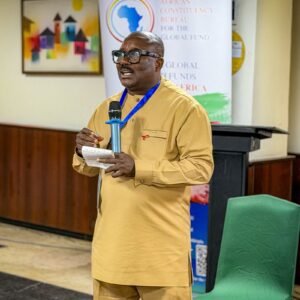
Countries are increasingly seeking to integrate services, supervision, training, supply chains, laboratories, monitoring systems and other functions across programmes. Yet the discussions also highlighted the practical difficulties of costing integrated interventions, allocating shared costs and defining institutional responsibilities.
The experience shared by Ghana was particularly illustrative. Although services were already largely integrated at facility level, programme management remained more fragmented, resulting in duplication in areas such as supervision and monitoring. Ghana’s response included efforts to integrate training, supportive supervision, health information systems and programme management, alongside a move towards a more consolidated implementation structure.
But participants also cautioned against assuming that integration automatically produces better outcomes. Concerns were raised about the potential impact on key populations, community systems and service quality if integration is pursued without sufficient attention to capacity, workload, accountability and financing.
The question, therefore, is not simply whether programmes should be integrated, but what should be integrated, at what level, under what conditions and with what safeguards to protect access and quality.
Country experience offers practical lessons
The Accra discussions provided more than a catalogue of challenges. They also showed how countries are adapting to a more constrained financing environment and how much can be learned from those experiences.
In Guinea-Bissau, the country conducted 11 regional dialogues across all its health regions, involving government representatives, civil society, community groups, key populations and other local stakeholders. The outputs of these regional consultations fed into a national dialogue that ultimately validated the funding request. The example illustrates the value of connecting national funding decisions with perspectives from across the health system, particularly where resources and institutional capacity are constrained.
Burundi demonstrated another dimension of country ownership. The country used integration as a cost-efficiency strategy, including joint training, integrated supervision, shared monitoring systems, joint sample transportation and integrated supply-chain functions. It also reported that government co-financing contributions effectively doubled during negotiations following engagement with the Ministry of Finance.
The lesson is not simply that integration can save money or that governments can increase their contributions. It is that country ownership is shaped by the quality of the processes through which governments, programmes and stakeholders make decisions about priorities and resources.
Burkina Faso offered yet another perspective. The country consolidated five grants into two integrated grants, bringing together malaria, TB, HIV and RSSH components, while also streamlining community structures. The experience highlighted both the potential efficiency gains and the institutional challenges involved in restructuring programmes including the need to manage changes in human resources, community structures and institutional responsibilities carefully.
Taken together, these experiences show that there is no single pathway to sustainability. Countries are using different approaches to consultation, financing, integration and institutional reform according to their own circumstances. Their value for the wider global health community lies not necessarily in replicating them, but in understanding what enables country-led solutions to work, where challenges arise and how global financing arrangements can better support them.
Sustainability also depends on the systems behind the programmes
The same principle emerged from discussions on supply chains.
Participants described bottlenecks ranging from procurement and customs delays to inadequate warehousing, fragmented logistics information and persistent last-mile challenges. Yet the meeting also offered examples of practical solutions.
Cameroon described emergency procurement arrangements, strategic buffer stocks and more integrated quantification processes. Ethiopia shared experience with centralised procurement, digital inventory systems, regional distribution hubs and integrated logistics. Togo highlighted efforts to strengthen logistics data and digital tools for forecasting, inventory management and distribution.
These examples point to a broader lesson: sustainability is not secured by financing programmes alone. It also depends on whether the systems through which commodities, information, people and resources move are resilient enough to sustain services when external support becomes less predictable.
That is particularly important in a period of constrained financing. Efficiency cannot simply mean spending less. It must also mean reducing duplication, improving visibility, strengthening national systems and ensuring that resources translate into uninterrupted services.
Country ownership is also about institutions and accountability
The discussions around Global Fund Country Coordinating Mechanisms provided another perspective on what may be lost if sustainability is understood only in financial terms.
Participants generally agreed that CCMs continue to provide important functions in stakeholder engagement, oversight, accountability and community participation, while recognising that their structures may need to evolve as countries assume greater ownership of health programmes.
Country experiences varied. South Sudan emphasised the CCM’s role in coordination and accountability; Zimbabwe argued that the focus should be on preserving core functions rather than structures for their own sake; Uganda shared experience with government financing and positioning of CCM functions within national health governance; Madagascar discussed efforts to strengthen political ownership; and Guinea highlighted the CCM’s role as an inclusive platform bringing together government, civil society, communities and development partners.
The discussion suggests that the question is not simply whether CCMs should continue in their current form. It is which functions need to be preserved, how they can be sustainably financed and how inclusive participation and accountability can be maintained as global health financing arrangements evolve.
The same concern appeared in discussions on collaboration between the Global Fund and Gavi. Participants highlighted the administrative burden created by parallel reporting requirements and called for greater alignment of planning, reporting and technical support.
These may appear to be operational issues. In reality, they have implications for how global health initiatives engage with countries, how accountability is organised and how much of the limited capacity of national institutions is consumed by managing external financing arrangements.
From country experience to global health governance
What emerged in Accra was therefore more than a discussion about how countries can manage with less money.
It was a conversation about how global health financing needs to evolve if country ownership is to become a reality rather than simply a policy objective.
The discussions showed that countries are already experimenting with new approaches: integrating programme functions, strengthening public financial management, mobilising domestic resources, redesigning supply chains, adapting governance arrangements and learning from one another. But they also showed the limits of expecting countries to achieve greater ownership while maintaining systems that can restrict their ability to exercise it.
This is where sustained country engagement becomes particularly important.
For the African Constituency Bureau, the value of these dialogues goes beyond convening stakeholders. The CBLN provides a space where country representatives can openly share practical experiences, challenges and emerging solutions across the constituency. The Accra meeting demonstrated how these exchanges can surface recurring policy questions that may not be visible from global-level discussions alone.
Country perspectives are not identical, and they should not be presented as though they are. But bringing different experiences together can reveal patterns: the gap between budget commitments and actual execution; the tension between safeguards and institutional capacity-building; the difficulty of integrating programmes without losing essential functions; and the administrative burden created by fragmented global health financing arrangements.
These are not merely country-level implementation concerns. They are questions about the design and functioning of global health financing itself.
As global health initiatives navigate a more constrained financing environment, country experience therefore needs to inform not only how programmes are implemented, but also how policies, financing mechanisms and governance arrangements are designed.
Ultimately, sustainable global health financing will depend not only on the resources mobilised, but also on the institutions strengthened, the systems trusted and the extent to which countries can shape the decisions that affect their health priorities.
The conversations in Accra offered a simple but important reminder: country ownership cannot remain an ambition expressed in global strategies. It must be reflected in the way global health financing works in practice.